
Why Mold Appears in Top-Floor Apartments After Rain
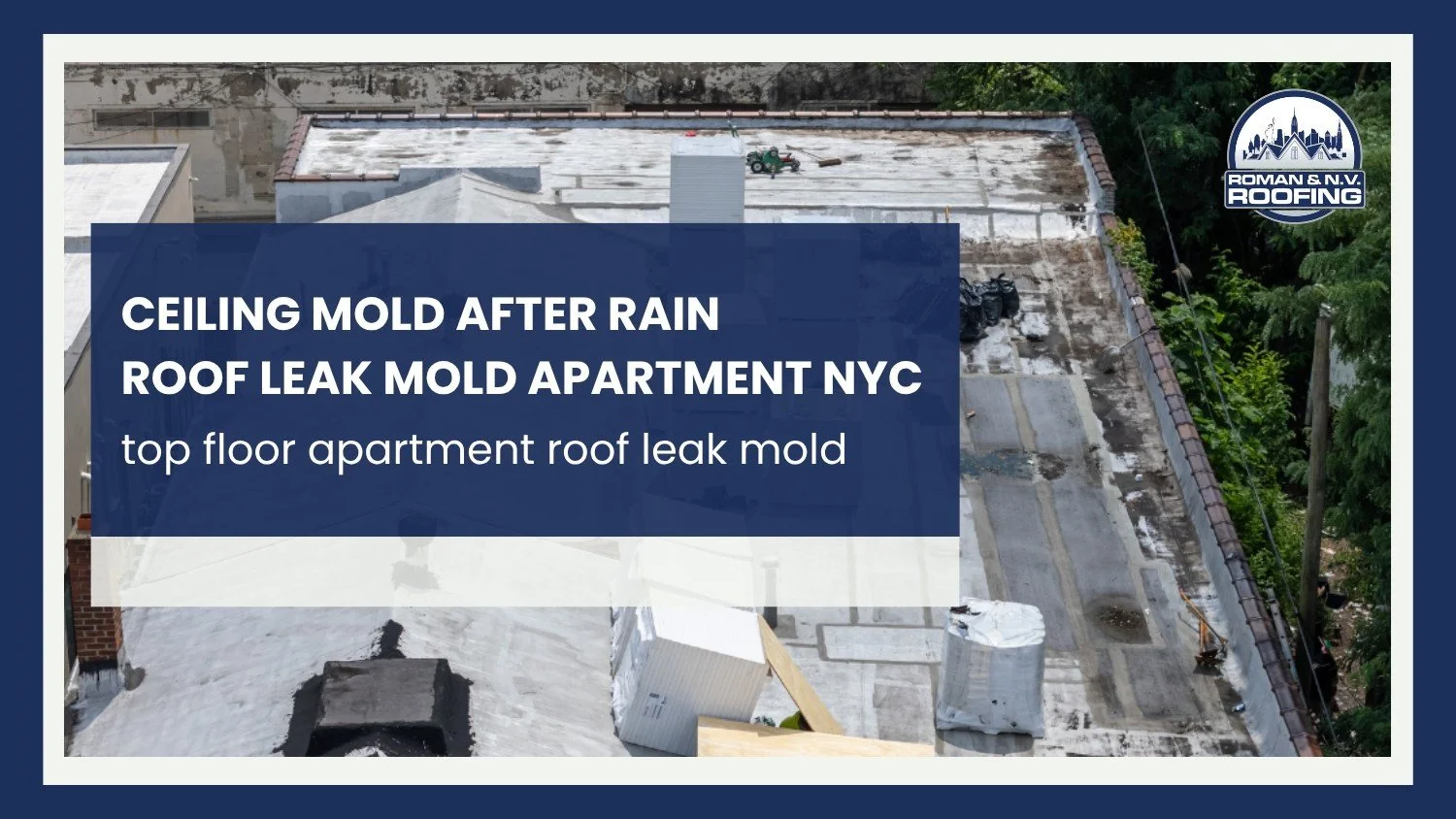
If you're seeing dark spots on your ceiling or walls after a rainstorm, you're not dealing with a random humidity issue. That mold is showing up because water is getting in through the roof above you. Ceiling mold after rain in a top-floor apartment is almost always a sign of a roof leak, and the longer it sits untreated, the worse the damage gets.
This guide breaks down exactly why this happens, what's going on above your head, and what needs to happen next.
What's Actually Causing Mold on Your Ceiling After Rain
Mold needs two things to grow: moisture and a surface to cling to. When a roof has a leak, water doesn't always pour in visibly. Most of the time, it seeps through slowly, soaking into the roof deck, insulation, and ceiling materials before you ever notice it.
By the time mold is visible on your ceiling, the moisture has been sitting there long enough for spores to take hold. That usually means the leak has been active for a while, even if the staining only appeared recently.
Here's the typical progression:
Rain penetrates a failing roof membrane, cracked flashing, or a damaged seam
Water travels horizontally through insulation and building materials
Moisture accumulates in the ceiling cavity above the top floor
With no airflow and trapped humidity, mold begins to grow
Staining, discoloration, or visible mold appears on the ceiling or upper walls
The surface you're seeing is just the end result. The actual problem is in the roof.
Why Top-Floor Apartments Get Hit the Hardest
Top-floor units are directly below the roof, which makes them the first to absorb any water intrusion from above. There's no buffer floor between you and whatever is going wrong with the building's roof system.
In New York City, most multi-unit residential buildings have flat or low-slope roofs. These roofing systems rely on a continuous waterproof membrane to keep water out. When that membrane starts to fail, whether from age, ponding water, or freeze-thaw cycles, water finds the path of least resistance down into the top floor.
Common roof failure points above top-floor apartments include:
Membrane seams and laps that have separated or dried out over time
Flashings around HVAC units, pipes, and parapet walls that have cracked or pulled away
Drain blockages that cause water to pond and eventually push under the membrane
Blistering or bubbling membrane that traps moisture below the surface
Unsealed penetrations from previous repairs or add-ons
Any one of these issues can let enough water in to trigger ceiling mold after rain in a top-floor apartment.
How Roof Leak Mold Develops So Quickly
Once water gets into the ceiling cavity, conditions are almost perfect for mold growth. Insulation holds moisture, there's minimal air circulation, and temperatures in a dark ceiling space can be warm. Most mold species can begin colonizing within 24 to 48 hours of water exposure under the right conditions.
That's why roof leak mold in an apartment NYC context tends to spread faster than people expect. A slow drip from a roof penetration might look minor, but it can be saturating insulation every time it rains. Over weeks or months, that recurring moisture builds up until the mold becomes visible from below.
This also explains why you might only notice the problem after a heavy rain. The leak may have been slow and intermittent, with mold growing quietly until a bigger storm finally pushed it to the surface.
Is It the Landlord's Responsibility or the Building's?
In New York City, building owners are responsible for maintaining the roof and preventing water intrusion. If you're a tenant in a top-floor apartment and you're seeing roof leak mold, that's a building maintenance issue, not a tenant issue.
Under NYC Housing Maintenance Code, landlords are required to keep roofs, walls, and ceilings in good repair and free from leaks. If you're experiencing ceiling mold after rain, you should document everything with photos, report it in writing to your landlord or management company, and if necessary, file a complaint with the NYC Department of Housing Preservation and Development (HPD).
For building owners and property managers in Brooklyn, this is also the point where ignoring a small leak becomes a much bigger liability. Mold-related complaints, tenant displacement, and structural damage all escalate the cost of what could have been a straightforward roof repair.
What Roof Leak Repair in Brooklyn Actually Involves
Getting roof leak repair in Brooklyn for a top-floor mold situation isn't just about patching the obvious spot. A proper repair process works backward from the visible damage to locate where water is actually entering.
Here's what a qualified roofing contractor should do:
Inspect the full roof surface, not just the area above the stained ceiling, since water travels before it drips
Check all flashings, including around HVAC curbs, parapets, pipes, skylights, and roof edges
Evaluate the membrane condition, looking for seam failures, blisters, cracks, or areas where the membrane has pulled back
Clear roof drains and check for ponding, since standing water accelerates membrane failure
Make targeted repairs using compatible materials, whether that's EPDM patches, TPO welding, or modified bitumen overlays
Test the repair before closing out the job
On the interior side, once the roof is sealed, the ceiling materials and insulation that absorbed water will need to be removed and replaced. Mold remediation may be required before new drywall or insulation goes in, depending on how far the growth has spread.
How to Tell If Your Roof Is the Source of the Mold
Not every ceiling mold situation comes from a roof leak, but in top-floor apartments, it's the most likely cause. Here are the signs that point specifically to the roof:
Mold or staining appears or worsens directly after rain
The affected area is on the ceiling or at the top of a wall, not near a bathroom or kitchen
There are no plumbing fixtures above the stained area
The staining follows a path, suggesting water traveled before dripping
You can see daylight, rust staining, or debris near the ceiling in extreme cases
If the mold is near a bathroom or kitchen, a plumbing leak may also be a factor. But when it shows up on a ceiling right after rain, the roof is the place to start.
Why Waiting Makes It More Expensive
A roof leak that's causing ceiling mold after rain is actively getting worse every time precipitation hits. Insulation that stays wet loses its R-value and eventually compresses. Wood decking can rot. Ceiling materials can sag or fail. And the mold spreads laterally, sometimes into walls and adjacent units.
From a cost standpoint, a targeted roof repair caught early is a fraction of what it costs to deal with deck replacement, mold remediation, interior rebuild, and potential tenant relocation. Building owners in Brooklyn who let roof leaks run through a season typically end up with three to five times the repair cost they would have faced six months earlier.
Roof Leak Repair Brooklyn: What to Do Next
If you're a tenant, document the mold, report it in writing, and follow up with HPD if your landlord doesn't respond within a reasonable time.
If you're a building owner or property manager in Brooklyn and you're getting tenant complaints about ceiling mold after rain, the roof needs to be looked at now. Not after winter. Not after the next inspection cycle. A qualified flat roofing contractor can identify the source and give you a repair scope before the damage compounds.
At Commercial Roofing Brooklyn, we work on multi-unit residential and commercial roofs throughout Brooklyn and the surrounding boroughs. We identify where leaks are actually entering, not just where they're showing up, and we repair them with materials and methods that hold up in NYC's climate.
If you're dealing with roof leak mold in an apartment NYC building you own or manage, contact Commercial Roofing Brooklyn to schedule an inspection.
FAQ: Roof Leaks and Ceiling Mold in Top-Floor Apartments
Why is mold appearing in top-floor apartments after rain? Mold in top-floor apartments after rain is almost always caused by a roof leak. Water seeps through a failing roof membrane, cracked flashing, or a blocked drain, soaks into ceiling materials and insulation, and creates the moisture conditions mold needs to grow. The mold becomes visible once moisture has been accumulating long enough for spores to colonize.
How long does it take for ceiling mold to appear after a roof leak? Mold can begin growing within 24 to 48 hours of water exposure under warm, humid conditions. In a ceiling cavity with trapped insulation and minimal airflow, it can spread significantly within one to two weeks. By the time staining is visible from below, the moisture problem has usually been active for longer than it appears.
Can roof leak mold spread to other apartments? Yes. Mold that starts in a ceiling cavity can spread laterally into wall cavities and adjacent units if the moisture source isn't stopped. In multi-unit buildings, a single roof leak above one top-floor apartment can affect neighboring units over time if it goes unaddressed.
Who is responsible for roof leak repair in a Brooklyn apartment building? In New York City, building owners are responsible for maintaining the roof and preventing water intrusion under the NYC Housing Maintenance Code. Tenants should report roof leak mold to their landlord in writing and can file a complaint with HPD if repairs aren't made in a reasonable timeframe.
What does roof leak repair in Brooklyn cost for a multi-unit building? Costs vary depending on the size of the roof, the extent of the damage, and the type of membrane system. A targeted repair for a localized leak is significantly less expensive than a full membrane replacement or interior rebuild. Getting a repair done early, before deck damage or widespread mold sets in, is almost always the lower-cost outcome.
Final Thoughts
Ceiling mold after rain isn't a cosmetic problem you can paint over. It's a sign that water is getting into the building through the roof, and it's going to keep getting worse until the roof is repaired. For top-floor apartments in Brooklyn, the source is almost always above, and the fix starts on the roof.
If you own or manage a building in Brooklyn and tenants are reporting mold after rain, get the roof inspected before the next storm adds to the damage. Reach out to Commercial Roofing Brooklyn to schedule a roof assessment.
