
Standing Water on a Flat Roof? What Commercial Roofing Brooklyn NY Pros Check First
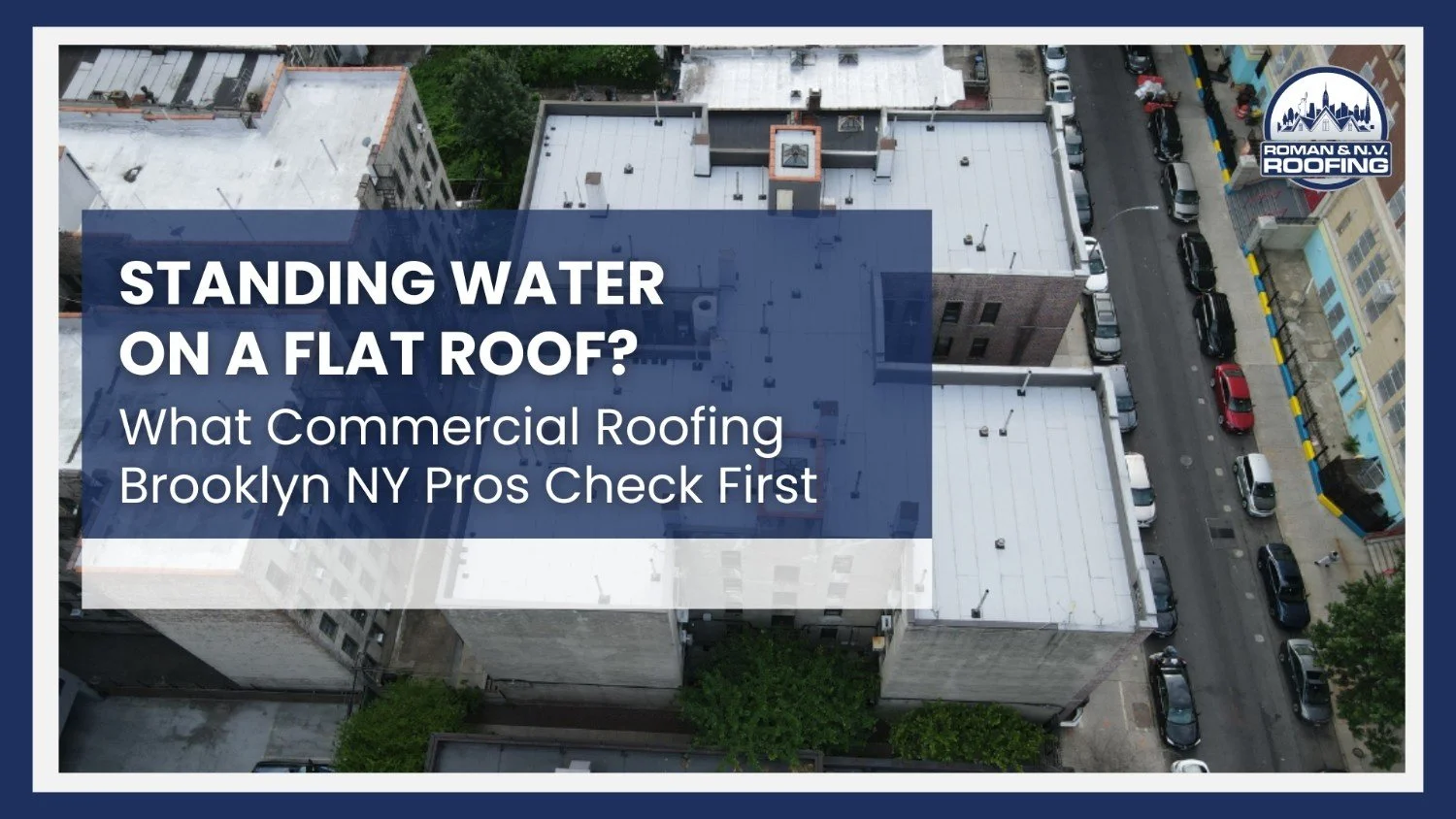
Water is pooling on your flat commercial roof in Brooklyn because the water cannot drain fast enough. Usually, a blocked drain, a low spot in the roof, or a sagging deck traps it. As a result, the water sits in place instead of flowing to the edges. Commercial roofing Brooklyn NY pros call this "ponding," and they treat it as an early warning sign.
So how serious is it? In most cases, a little water after a storm is normal. However, if water stays on the roof more than 48 hours after the rain stops, that crosses the industry line for ponding. Therefore, the smart move is to find the cause early, because standing water rarely fixes itself.
This guide walks through what professionals inspect first, why ponding matters, and the steps you can take next.
Why Is There Water Pooling on My Flat Commercial Roof in Brooklyn?
Flat roofs are not truly flat. Instead, they are built with a slight slope so water runs toward drains. The International Building Code requires at least a 1/4-inch slope per foot, which works out to about a 2% pitch. When that slope is lost, water has nowhere to go.
Over time, several things can flatten or block that drainage path. For example, a roof deck can settle, insulation can compress, or drains can clog with debris. Each problem changes how water moves across the surface. As a result, puddles form in the same spots after every storm.
Brooklyn weather makes this worse. Heavy rain, snowmelt, and freeze-thaw cycles all stress a flat roof. Because of that, ponding is one of the most common issues building owners report here.
What Commercial Roofing Brooklyn NY Pros Check First
When a pro arrives, they do not guess. Instead, they follow a clear order to find the real cause. Below is the checklist most commercial roofing Brooklyn NY teams run through during a site visit.
1. Roof Drains, Scuppers, and Gutters
First, pros check the drainage points. Leaves, gravel, and trash often clog drains and scuppers. When that happens, water backs up fast, even on a healthy roof. Therefore, clearing and testing every drain is step one.
They also check for the right number of drains. An undersized system cannot move heavy Brooklyn rain fast enough. So if water pools even with clear drains, the roof may simply need more drainage capacity.
2. Low Spots and Lost Slope
Next, they look for low areas where the deck has dipped. A roof can lose its slope as the structure ages or as insulation gets wet and compresses. So pros use a level, a hose test, or even chalk lines to map the low points.
3. A Sagging or Weak Roof Deck
After that, they inspect the deck itself. A sagging deck signals a deeper structural problem, not just a surface one. Because this can affect safety, pros flag it right away and may bring in a structural check.
4. HVAC Units and Rooftop Equipment
Many flat roofs hold HVAC units, vents, and pipes. However, these units sometimes drip condensation or block water flow. As a result, pools form around the equipment. Pros check seals, curbs, and condensate lines during the visit.
5. Seams, Flashing, and Membrane Condition
Finally, they examine the membrane, seams, and flashing. Standing water hides leaks until the damage spreads. Therefore, catching a weak seam early often prevents a much larger roof leak repair Brooklyn job later.
Ponding Caused by Roof Type
The reason water pools often depends on what roof you have. So pros adjust their inspection based on the system. Here is how the common Brooklyn flat-roof types behave.
EPDM (Rubber) Roofs
EPDM is durable, but it can stretch and dip over time. As a result, low spots form where the membrane settles. Pros check the field seams closely, because those joints are where ponding water tends to break through first.
TPO and PVC Roofs
These single-ply roofs rely on heat-welded seams. However, a weak weld can open under constant water pressure. So pros probe the seams and check for shrinkage that pulls the membrane tight and flat.
Built-Up and Modified Bitumen Roofs
Older built-up roofs are common on Brooklyn buildings. Over the years, the surface can wear, blister, and lose its slope. Therefore, pros look for soft spots and worn gravel that point to trapped moisture.
Metal Flat Roofs
Metal panels drain well when sloped right. However, ponding here often signals a fastener or panel problem. Because rust spreads fast under standing water, pros treat these pools as urgent.
Why Standing Water Is a Real Problem
Some owners ignore puddles because the roof still looks fine. However, ponding causes slow, hidden harm. The longer water sits, the more risk it adds.
Weight is the first concern. Water is heavy, since one inch of water over one square foot weighs about 5.2 pounds. So a large pool can add hundreds of pounds to your deck. As a result, the low spot sinks deeper and holds even more water.
Leaks come next. Standing water finds every crack, seam, and worn spot. Because the pressure stays constant, water eventually works its way through the membrane. Then it reaches the insulation and the building below.
Other risks build over time too. For example, ponding speeds up UV damage, grows algae and moss, and shortens the life of the roof. Therefore, acting early protects both the roof and your budget.
How Long Before Ponding Damages Your Roof?
This is the most common question owners ask. The honest answer is that it depends on the roof type and the water depth.
Most warranties treat water that sits past 48 hours as ponding, and many manufacturers will void coverage when it keeps happening. So even if no leak shows yet, repeated ponding can cost you your warranty. Because of that, the 48-hour mark is the line to watch.
In short, do not wait for a visible leak. Instead, schedule a roof inspection Brooklyn NY service when puddles keep returning to the same spot.
What to Do About Roof Leak Repair Brooklyn Owners Need
If you already see stains, drips, or bubbling paint inside, the water has likely broken through. At that point, fast action matters. Here is a simple order to follow.
Document it. Take photos of the puddles and any indoor damage. Because this helps with both repairs and insurance, do it before anything dries.
Clear what you safely can. Remove loose debris from accessible drains. However, never walk a wet or icy roof yourself.
Call a pro for roof leak repair Brooklyn buildings can rely on. A trained team finds the source, not just the symptom.
Ask about the root cause. A patch helps short-term. However, fixing the drainage problem prevents repeat leaks.
For emergencies, a quick response limits interior damage. Therefore, keep a trusted local roofer's number handy before the next storm hits.
When to Schedule a Roof Inspection Brooklyn, NY
You do not need to wait for a problem to inspect a flat roof. In fact, regular checks catch issues while they are still cheap to fix. A good rule is to inspect twice a year, plus after any major storm.
Watch for these warning signs between visits:
Puddles that stay more than 48 hours after rain
Water rings, mud lines, or algae on the membrane
Soft or springy spots underfoot
Stains, drips, or musty smells inside the building
Higher energy bills from wet, failing insulation
If you notice any of these, book a roof inspection Brooklyn NY pros can complete quickly. Early action almost always costs less than a full replacement.
Timing matters too. Spring is a smart time to inspect, because winter freeze-thaw cycles often crack seams and flashing. Fall is the other key window, since clearing drains before the rainy season prevents most ponding. In addition, always inspect after a heavy storm or snow load, because that is when new low spots appear.
A documented inspection history also helps later. For example, if you ever file a warranty or insurance claim, those records prove you maintained the roof. Therefore, many Brooklyn owners keep a simple log of every visit and repair.
Frequently Asked Questions
How long can water sit on a flat roof before it is a problem?
Water should drain within 48 hours of rain. Therefore, anything that stays longer counts as ponding. Because ponding can void warranties and cause leaks, treat the 48-hour mark as your action point.
Does standing water always mean my roof needs replacing?
No, not always. In many cases, clearing drains or fixing one low spot solves the issue. However, repeated ponding across a large area can signal deck or insulation damage. So an inspection is the only way to know for sure.
Can I fix ponding water on my commercial roof myself?
You can safely clear debris from accessible drains. However, finding the slope or deck problem behind the ponding takes training and tools. Because a wet flat roof is also slippery and unsafe, most owners call a commercial roofing Brooklyn NY pro instead.
How much does it cost to fix a ponding water problem?
Cost depends on the cause. A clogged drain is a minor fix, while a re-sloped section or deck repair costs more. Therefore, an inspection gives you a clear price before any work starts.
Final Thoughts
Standing water on a flat roof is a signal, not just a puddle. It points to a drainage problem, a low spot, or a deck issue underneath. Because the damage builds slowly, the best response is to find the cause early.
Pros follow a clear order: drains first, then slope, then deck, then equipment, then the membrane. So when you understand that checklist, you can spot trouble before it spreads. In the end, a quick inspection protects your roof, your building, and your budget.
Get Your Flat Roof Checked
Seeing water that will not drain on your Brooklyn flat roof? Roman and N.V. Roofing inspects commercial flat roofs across Brooklyn and pinpoints the real cause of ponding. Reach out for a roof inspection or emergency roof leak repair, and get a clear plan before the next storm.
Written by Billy Duka, Roman and N.V. Roofing. Learn more at commercialroofingbrooklyn.com/
