
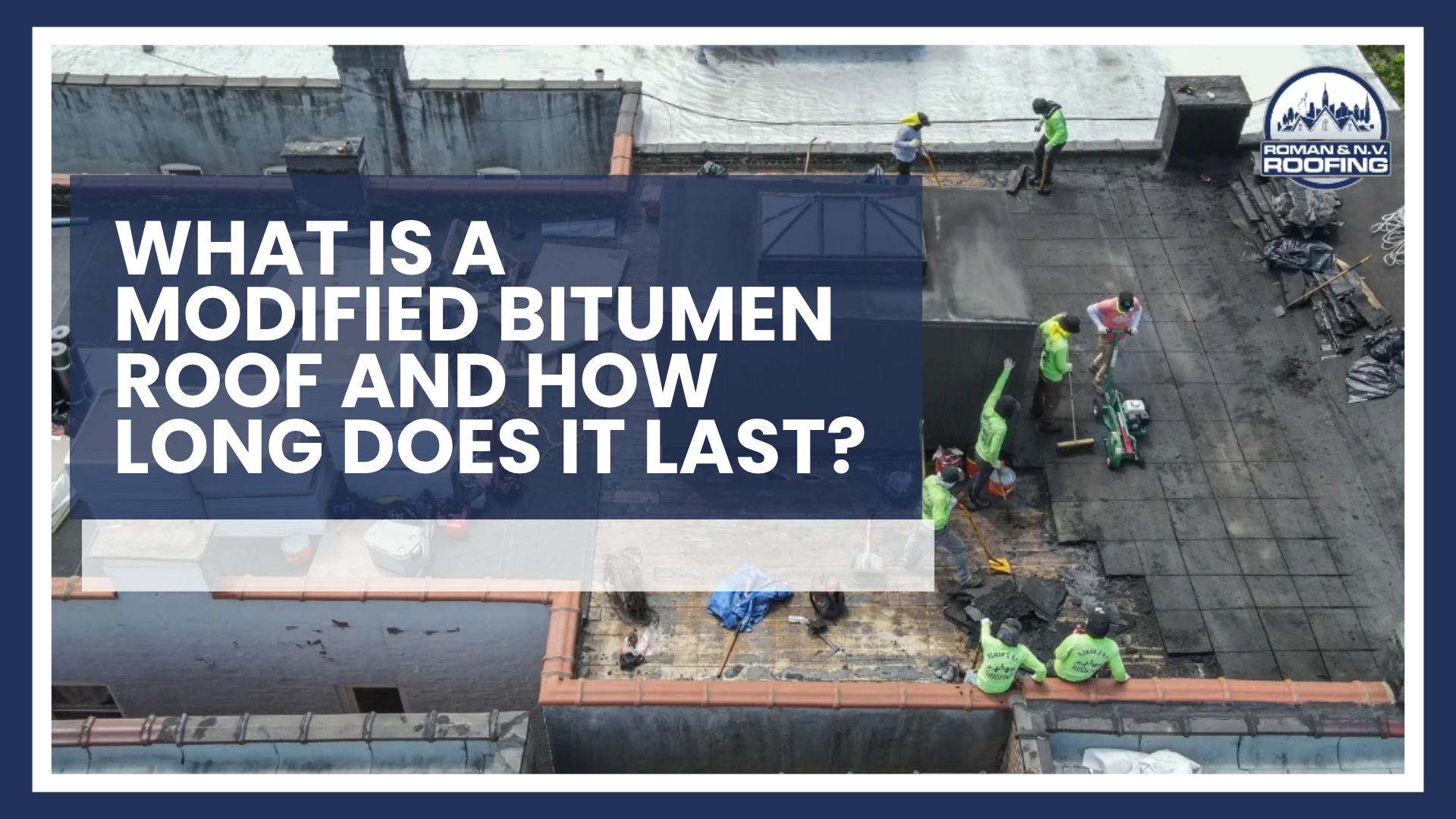
A modified bitumen roof is a layered asphalt roof blended with polymers and reinforced with a fabric mat. Most of these roofs last somewhere between 15 and 25 years. Where yours lands in that range depends on how many layers went down, how well the crew installed them, and how you maintain the roof.
Mod bit, as roofers call it, covers a huge share of Brooklyn’s flat roofs. If you own a row house, a walk-up, or a small commercial building, there is a solid chance you are standing under one right now.
Modified Bitumen Roof Basics
Plain asphalt cracks in the cold and softens in the heat. Manufacturers fix that by adding polymers, which make it more flexible and durable. They then press this “modified” asphalt onto a mat of polyester or fiberglass and roll it up for shipping.
On the roof, installers usually put down at least two layers. The bottom one, called the base sheet, bonds to the roof below. The top one, called the cap sheet, faces the weather and usually carries a coating of mineral granules that shields the asphalt from sunlight.
Each layer overlaps the next, so the finished roof is thick and tough. That layered design is a big part of why it handles abuse so well.
SBS vs APP: The Two Main Types
Not all modified bitumen is the same. The polymer added to the asphalt changes how the sheet behaves:
SBS (styrene-butadiene-styrene): acts more like rubber, stays flexible in cold weather, and works with torch, mop, glue, or peel-and-stick installs
APP (atactic polypropylene): acts more like plastic, resists heat and sun well, and usually goes down with a torch
In a city with cold winters and hot summers, both types show up on Brooklyn roofs. Your roofer’s choice often depends on the install method, the building, and the manufacturer’s system.
How a Modified Bitumen Roof Goes On
Crews have four common ways to install mod bit. Each comes with its own trade-offs:
Torch-applied: a propane torch melts the back of the sheet so it fuses in place
Hot-mopped: crews set sheets into hot liquid asphalt, an older method some jobs still use
Cold adhesive: a solvent-based glue bonds the sheets without open flame
Self-adhered: peel-and-stick sheets bond under pressure with no heat at all
Torching creates a strong bond, but it brings fire risk, especially around wood framing and old cornices. On older buildings, many owners ask for self-adhered or cold-applied systems to avoid open flame near combustible materials.
How Long Does a Modified Bitumen Roof Last?
A well-built mod bit roof commonly gives about two decades of service, with many falling between 15 and 25 years. Some last longer with steady care, while rushed installs can fail much sooner.
Lifespan is never a fixed number. Several factors push a roof toward one end of that range or the other:
Number of plies: two or three layers outlast a single sheet
Installation quality: good laps and solid bonding prevent early leaks
Drainage: standing water ages asphalt much faster
Sun exposure: granule loss lets UV rays break down the surface
Foot traffic: regular walking without pads wears the cap sheet
Maintenance: small fixes made early stop big problems later
Signs Your Mod Bit Roof Is Wearing Out
Modified bitumen gives plenty of warning before it fails. Walk the roof, or have a roofer do it, and look for these clues:
Bald spots: areas where granules have washed away, exposing black asphalt
Blisters: raised bubbles that form when air or moisture slips between layers
Cracks: a pattern of fine cracks that looks like alligator skin
Open laps: seams that have separated or curled at the edges
Ponding: water that sits in the same spots after storms
Soft spots: areas that feel spongy, which can mean wet insulation below
A roofer can usually fix one or two of these. When they show up across the whole roof, replacement is near.
Repairing and Restoring an Older Mod Bit Roof
Mod bit is one of the easiest roof types to patch. Crews cut out damaged areas, prime the surface, and bond a matching piece of cap sheet over the spot. They reseal open laps or cover them with a strip of new material.
A compatible roof coating can often slow granule loss. Reflective coatings protect the asphalt from sunlight and can add years when the roof underneath is still dry and firmly attached. A coating will not help, though, if water has already soaked the insulation. In that case, the wet material has to come out, and a full replacement is usually the better investment.
Simple Habits That Add Years to Mod Bit
A few easy habits keep a mod bit roof in its best shape. Clear drains and scuppers each spring and fall, because standing water is one of the fastest ways to age asphalt. Lay walkway pads along the paths people use most, especially around air conditioning units and the roof hatch.
Keep an eye on the surface after big storms and heat waves. If you notice granules collecting in gutters or near drains, the cap sheet is wearing, and a coating may be worth discussing. Catching that early often adds several years before a full replacement.
Why So Many Brooklyn Row Houses Use It
Walk across the rooftops of Clinton Hill, Prospect Heights, or Bushwick, and you will find mod bit everywhere. It suits the way these buildings get used.
Small roofs on row houses and walk-ups carry lots of details, like parapets, hatches, chimneys, and vents. Mod bit handles those tight corners well. Its thickness also stands up to owners, tenants, and service techs walking across it. When someone does damage it, a crew can patch the spot with matching material in an afternoon.
Is a Modified Bitumen Roof Right for Your Building?
Mod bit is a smart pick when you need toughness, easy repairs, and a system that handles busy, detailed roofs. With good installation and regular checks, it can protect a Brooklyn building for two decades or more. If your current roof is showing bald spots, blisters, or open seams, now is the time to have it looked at. For a side-by-side look at other materials, see our guide to flat roof systems in Brooklyn.
Our family-owned company has installed and repaired mod bit roofs across Brooklyn since 1987. For a closer look at your modified bitumen roof, call N.V. & Roman Commercial Roofing at (917) 440-1800.
FAQ Section
Q: How long does a modified bitumen roof last?
A: Most modified bitumen roofs last about 15 to 25 years, depending on plies, installation quality, drainage, and upkeep.
Q: What is the difference between SBS and APP modified bitumen?
A: SBS behaves like rubber and stays flexible in cold weather, while APP behaves like plastic and resists heat.
Q: Can you walk on a modified bitumen roof?
A: Yes. Its thick, layered build handles foot traffic well, though walkway pads help protect busy paths.
Q: Is modified bitumen the same as torch down roofing?
A: Torch down is one way to install modified bitumen. Other methods use cold adhesive or self-adhered sheets.
About the Author
Billy Duka is a second-generation roofer with N.V. & Roman Commercial Roofing, a Brooklyn family business on local rooftops since 1987. He writes straightforward roofing guides for property owners who want to understand their options before calling a contractor.
