
How Long Does a Commercial Roof Replacement Take in Brooklyn?
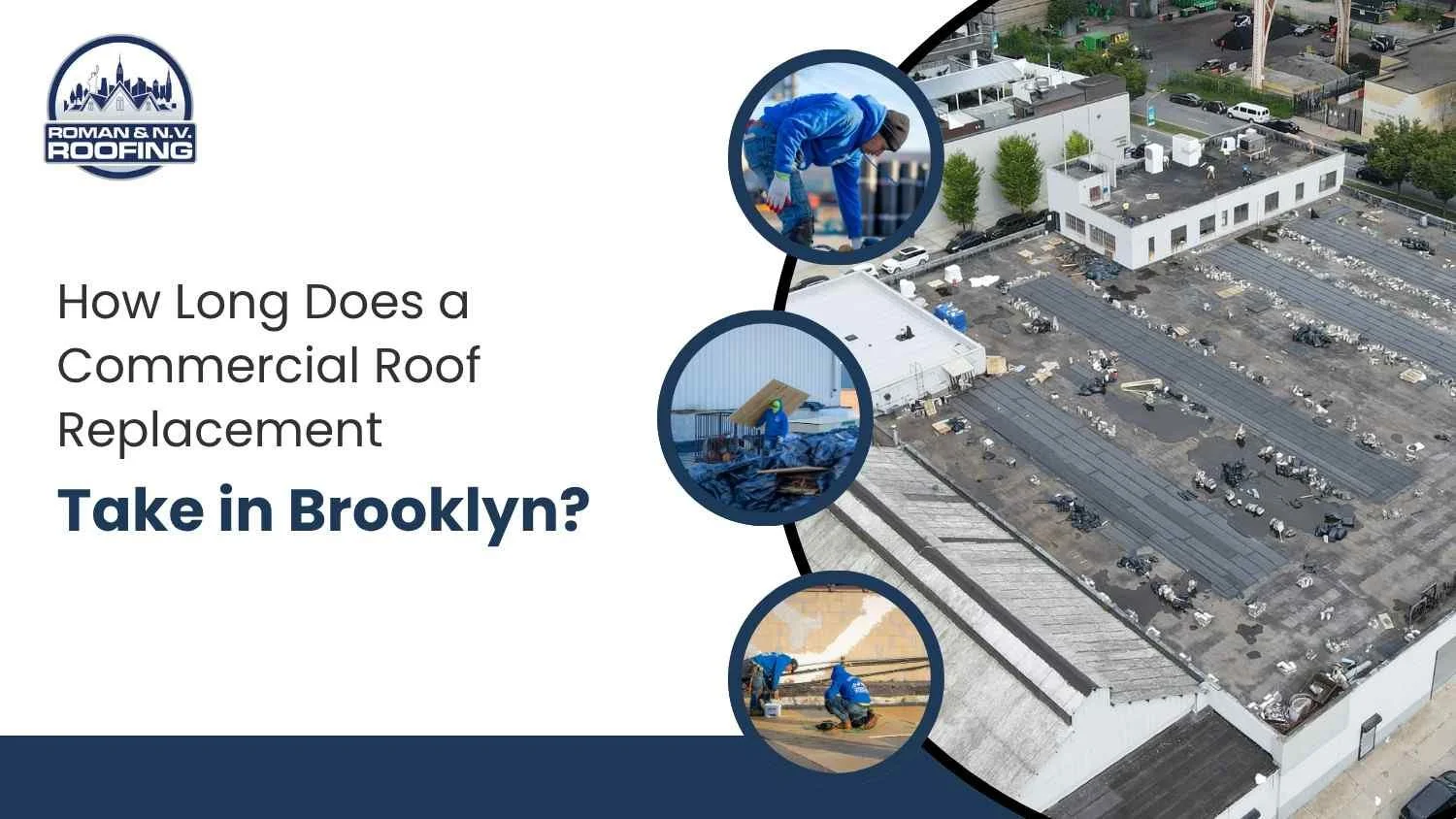
It's usually one of the first questions a property owner asks once a roof replacement stops being a maybe and starts being a yes. Not "how much," at least not at first, but "how long is this going to disrupt my building." Tenants need notice, deliveries need rerouting, and someone has to explain to the top-floor office why there's a crew and a dumpster on the roof for the next few weeks.
The honest answer is that a commercial roof replacement timeline depends on the building, but most Brooklyn projects fall somewhere between two and six weeks of active work, with smaller roofs on the faster end. Here's what actually determines where your project lands on that range, and what the process looks like from start to finish.
Why no two timelines look the same
Two buildings with roofs the exact same size can still take very different amounts of time to replace. A few things drive that:
Roof size and complexity. A simple, open flat roof moves faster than one broken up by HVAC units, skylights, bulkheads, and multiple drains.
What's underneath. If the deck is sound, replacement moves quickly. If there's wet insulation or deck damage once the old membrane comes off, that adds repair time nobody could fully quote in advance.
Access. Rooftop access on an attached Brooklyn rowhouse or a building with a tight loading area takes longer to set up than a warehouse with a clear driveway.
Weather. Membrane installation needs dry conditions. A rainy stretch in October can push a two-week job into three.
Permitting. Larger commercial projects generally require permit review before work starts, and that step runs on the city's schedule, not the contractor's.
None of that is meant to make the timeline sound unpredictable. It's meant to explain why a contractor who gives you an exact date before seeing the roof is guessing.
The typical phases of a commercial roof replacement
Once a project is scoped, most jobs move through the same general sequence:
1. Inspection and scope confirmation (before work starts). This is where the contractor documents the current condition and confirms what the replacement actually needs to include. If you haven't had a recent roof inspection, this step usually happens first, not on the day the crew shows up.
2. Permitting and material ordering. For most commercial-scale projects, this runs in parallel with scheduling. It's often the least visible part of the timeline and also the part with the least flexibility, since it depends on outside review.
3. Mobilization. Equipment, materials, and safety setup arrive on site. On a Brooklyn building, this can take longer than people expect, especially if the roof is only reachable through a narrow stairwell or a shared building entrance.
4. Tear-off. The existing roof covering comes off down to the deck. This is usually the fastest visible phase, though it's also where surprises show up. If the deck is wet or damaged in places, this is when the crew finds out.
5. Deck repair, if needed. Not every project needs this step, but when it's needed, it's the phase most likely to add unplanned days.
6. New insulation and membrane installation. The core of the job, and typically the longest single phase on a larger roof.
7. Flashing, edge detail, and drainage work. Where the roof meets parapets, walls, vents, and drains gets finished last, since these details depend on the membrane already being in place.
8. Final walkthrough and cleanup. A completed job includes a final check of seams, flashing, and drainage before the crew leaves, along with debris removal.
On a straightforward flat roof, phases 3 through 8 might run inside two to three weeks. On a larger or more complex commercial building, four to six weeks is a more realistic window.
What can push the timeline out
A few things reliably add time to an otherwise well-planned project: wet insulation discovered during tear-off, extended rain during membrane installation, or a permit review that takes longer than expected. None of these are signs of a poorly run project. They're the reason a good contractor gives you a range up front and updates you if conditions change, rather than promising a fixed date and hoping for the best.
What this looks like in a Brooklyn building specifically
Local conditions shape the timeline more than people expect. Attached buildings and rowhouses often have limited roof access, which slows how quickly equipment and materials move up and down. Older or informally modified roof lines sometimes reveal drainage or slope issues once the old covering comes off, extending the deck-repair phase. And for multi-tenant buildings, coordinating access and notifying occupants takes real planning time before the crew arrives, which is a big part of what property management roofing work is built around.
How to keep your project on schedule
There's a fair amount an owner can do before the crew arrives: book the work outside peak storm season when contractors have more flexibility, get a thorough inspection done ahead of time to reduce surprises, and ask your contractor for a phased schedule with rough day counts for each step, rather than a single end date.
The bottom line
Most commercial roofs replacements in Brooklyn run somewhere between two and six weeks of active work, depending on the building, the roof's condition underneath, and the weather during installation. The clearest way to protect your timeline is to start with a real inspection and ask for a phased schedule rather than a single promised date.
If you're weighing repair against replacement in the first place, our breakdown of roof repair vs. roof replacement in Brooklyn is a good next stop. And if you're ready to talk timing for your specific building, N.V. & Roman has been working on commercial roofs across Brooklyn since 1987 and can walk your roof and give you a realistic schedule before anything is booked. Get in touch when you're ready to plan yours.
